
As parents, one of the most common concerns is seeing their child not eating well. Many children go through phases where they eat less than usual, refuse meals, or become picky eaters. While occasional changes in appetite are perfectly normal, a prolonged loss of appetite may sometimes indicate an underlying issue that deserves attention.
If your child not eating well, it does not always mean something serious is wrong. Growth patterns, activity levels, emotional changes, eating habits, and even seasonal illnesses can temporarily reduce a child’s appetite. However, understanding the possible causes can help parents take the right steps at the right time.
In this comprehensive guide, you’ll learn why a child not eating well, the most common medical and lifestyle causes, practical home remedies, healthy eating strategies, and when it is important to seek medical advice.
Why Is My Child Not Eating Well?

Every child has different nutritional needs. Some children naturally eat more, while others eat less. Appetite also changes depending on age, growth spurts, and physical activity.
A child not eating well for one or two days is usually not a major concern if they remain active and hydrated. However, if poor eating continues for several weeks or is accompanied by weight loss or other symptoms, parents should investigate further.
Common Causes of Poor Appetite in Children
Understanding the cause is the first step toward solving the problem.
1. Irregular Eating Habits
One of the biggest reasons a child not eating well is an inconsistent eating schedule.
Many children snack throughout the day instead of eating proper meals. Sugary snacks, chocolates, packaged foods, or juices can fill their stomach before mealtime.
Signs include:
- Skipping breakfast
- Eating while watching television
- Constant snacking
- Refusing family meals
What Parents Can Do
- Serve meals at fixed times.
- Limit snacks between meals.
- Avoid sugary drinks before lunch or dinner.
- Encourage family meals together.
2. Worm Infestation
Intestinal worms are surprisingly common among children, especially those who frequently play outdoors.
Worm infections can reduce appetite because parasites compete for nutrients inside the digestive system.
Common symptoms include:
- Poor appetite
- Stomach pain
- Itching around the anus
- Weight loss
- Weakness
- Restless sleep
Regular deworming, as advised by your healthcare provider, can help prevent this problem.
3. Nutritional Deficiencies
A child lacking important vitamins and minerals may gradually lose interest in food.
Common nutrient deficiencies include:
Iron Deficiency
Low iron levels may cause:
- Fatigue
- Pale skin
- Reduced appetite
- Difficulty concentrating
Zinc Deficiency
Zinc plays a significant role in taste and appetite regulation.
Children with zinc deficiency may:
- Eat less
- Grow slowly
- Have weaker immunity
- Develop frequent infections
Vitamin Deficiencies
Deficiencies in Vitamin D, Vitamin B12, and folate may also contribute to reduced appetite and lower energy levels.
4. Digestive Problems
Digestive discomfort is another frequent reason for child not eating well.
Children may avoid food if eating causes pain or discomfort.
Possible digestive conditions include:
- Constipation
- Acid reflux
- Gastritis
- Food intolerance
- Indigestion
Parents should pay attention if the child complains about stomach pain after meals or frequently avoids certain foods.
5. Viral or Bacterial Infections
Temporary illnesses often reduce appetite.
Examples include:
- Common cold
- Flu
- Fever
- Sore throat
- Ear infections
- Viral gastroenteritis
Most children regain their appetite after recovering from the illness.
During this period:
- Offer plenty of fluids.
- Provide light, nutritious meals.
- Avoid forcing food.
6. Emotional and Psychological Factors
Children experience emotional stress just like adults.
Changes that may affect appetite include:
- Starting school
- Bullying
- Family conflicts
- Anxiety
- Depression
- Fear of exams
If emotional changes are affecting eating habits, gentle communication and emotional support are essential.
7. Too Much Screen Time
Many children eat while watching cartoons or using mobile phones.
Although this may seem helpful, excessive screen use often disrupts natural hunger cues.
Instead of recognizing fullness or hunger, children become distracted and develop unhealthy eating habits.
Experts recommend:
- No mobile phones during meals.
- Eat together as a family.
- Encourage conversation during mealtime.
8. Lack of Physical Activity
Children who spend most of their day indoors may naturally feel less hungry.
Regular physical activity helps stimulate appetite by increasing energy expenditure.
Encourage activities such as:
- Outdoor games
- Cycling
- Running
- Swimming
- Dancing
- Walking with parents
Even 60 minutes of active play each day can improve overall health and appetite.

Signs That Poor Appetite May Be a Medical Concern
Although many cases are harmless, parents should not ignore persistent symptoms.
Consult a healthcare professional if your child experiences:
- Continuous refusal to eat for several weeks
- Noticeable weight loss
- Persistent vomiting
- Severe stomach pain
- Frequent diarrhea
- Extreme tiredness
- High fever
- Difficulty swallowing
- Blood in stool
- Poor growth compared with children of the same age
These symptoms may indicate an underlying medical condition requiring professional evaluation.
How Doctors Diagnose Poor Appetite
If your child not eating well for an extended period, your pediatrician will begin by reviewing the child’s medical history, eating habits, growth chart, and recent illnesses.
Depending on the symptoms, the doctor may recommend:
- Physical examination
- Growth assessment
- Blood tests
- Stool examination for worms
- Urine tests
- Allergy testing
- Nutritional assessment
These investigations help identify the exact cause and guide appropriate treatment instead of simply trying to increase appetite without addressing the underlying issue.
Can Poor Appetite Affect Growth?
Yes. When a child consistently eats less than their body needs, it can affect healthy growth and development over time.
Children require adequate calories, protein, vitamins, minerals, and healthy fats to support:
- Brain development
- Bone growth
- Strong immunity
- Muscle development
- Learning and concentration
- Energy for daily activities
If poor appetite continues for months without intervention, nutritional deficiencies may develop, potentially impacting physical and cognitive development. Early identification and timely management can help prevent long-term complications.
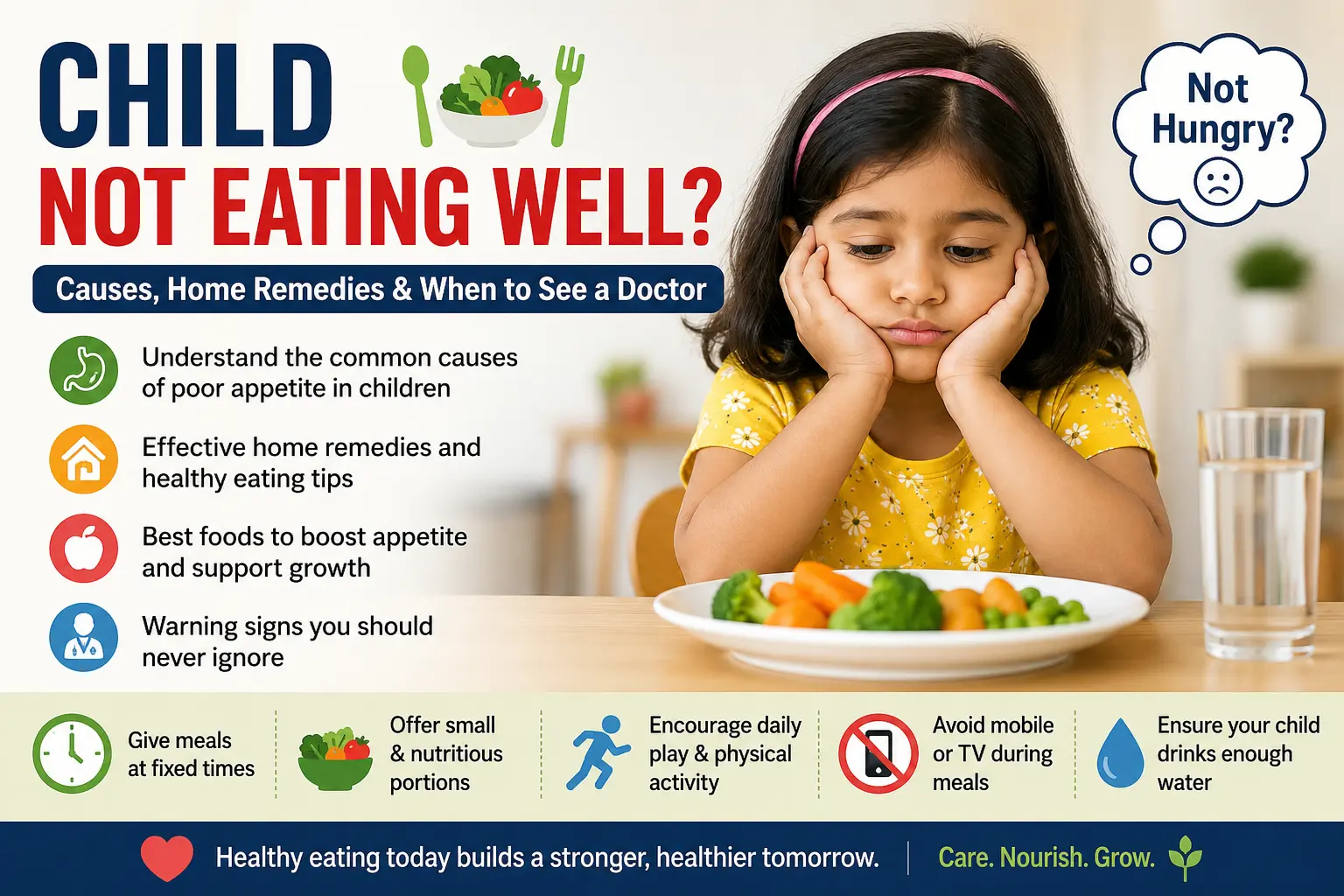
Home Remedies, Healthy Foods, and Practical Tips for a Child Not Eating Well
If your Child Not Eating Well, don’t panic. In many cases, simple changes in daily routines, meal planning, and eating habits can significantly improve your child’s appetite. The goal is not to force your child to eat more but to create a healthy environment where eating becomes enjoyable and natural.
This section explains evidence-based home remedies, nutritious food choices, and practical parenting strategies that encourage healthy eating habits.
Best Home Remedies for a Child Not Eating Well
Many parents look for natural ways to improve appetite before considering medications. While there is no magic remedy, these healthy practices can support better eating habits.
1. Maintain a Regular Meal Schedule
Children thrive on routine. Serving meals at the same time every day helps the body develop a natural hunger cycle.
Tips:
- Offer three balanced meals and two healthy snacks daily.
- Avoid allowing your child to graze on food throughout the day.
- Leave at least 2–3 hours between meals and snacks.
- Serve meals in a calm and pleasant environment.
Consistency helps children recognize when it is time to eat.
2. Offer Small, Frequent Meals
A large plate of food may feel overwhelming, especially if your child has a poor appetite.
Instead:
- Serve smaller portions.
- Allow your child to ask for more if still hungry.
- Focus on nutrient-rich foods rather than large quantities.
Small meals are often more appealing and easier to finish.
3. Make Food Attractive
Children often eat with their eyes first.
Try:
- Colorful fruits and vegetables
- Fun-shaped sandwiches
- Smiley-face pancakes
- Animal-shaped snacks
- Rainbow fruit platters
Creative food presentation can make mealtime more exciting.
4. Encourage Daily Physical Activity
Physical activity naturally stimulates hunger.
Children should get at least 60 minutes of active play each day through:
- Running
- Cycling
- Football
- Swimming
- Dancing
- Outdoor games
Active children usually develop healthier appetites than those who spend most of the day sitting indoors.
5. Keep Mealtime Stress-Free
Avoid:
- Scolding your child for not eating
- Forcing every bite
- Comparing your child with siblings
- Using food as punishment or reward
Instead:
- Praise healthy eating.
- Let children decide how much to eat.
- Keep family conversations positive during meals.
A relaxed atmosphere encourages better eating habits.
6. Avoid Screens During Meals
Television and mobile phones distract children from recognizing hunger and fullness.
Create a “screen-free dining table” rule.
Benefits include:
- Better focus on food
- Improved family bonding
- Healthier eating habits
- Reduced overeating or undereating
Healthy Foods That May Improve Appetite
If your Child Not Eating Well, choosing nutrient-dense foods is more important than simply increasing the quantity of food.
Protein-Rich Foods
Protein supports growth and muscle development.
Examples:
- Eggs
- Milk
- Yogurt
- Paneer
- Cheese
- Chicken
- Fish
- Lentils
- Beans
Fresh Fruits
Fruits provide vitamins, minerals, and natural sweetness.
Great choices include:
- Apples
- Bananas
- Oranges
- Mangoes
- Papaya
- Pears
- Berries
- Watermelon
Serve whole fruits instead of sugary fruit juices whenever possible.
Vegetables
Vegetables provide fiber and essential nutrients.
Include:
- Carrots
- Spinach
- Broccoli
- Pumpkin
- Sweet potato
- Green peas
- Beetroot
Mix vegetables into soups, sandwiches, pasta, or parathas if your child is a picky eater.
Whole Grains
Healthy carbohydrates provide sustained energy.
Choose:
- Brown rice
- Whole wheat bread
- Oats
- Millet
- Quinoa
- Whole grain pasta
Healthy Fats
Healthy fats are essential for growing children.
Include:
- Nuts (if age-appropriate)
- Seeds
- Peanut butter
- Avocado
- Olive oil
Dairy Products
Milk products provide calcium and protein.
Healthy options:
- Milk
- Yogurt
- Cheese
- Homemade smoothies
Avoid adding excessive sugar.
Foods to Limit
Certain foods reduce appetite because they fill the stomach without providing adequate nutrition.
Limit:
- Chips
- Candy
- Chocolates
- Sugary drinks
- Soft drinks
- Instant noodles
- Fast food
- Deep-fried snacks
- Packaged processed foods
These foods may make children feel full while supplying very little nutrition.
Sample Daily Meal Plan
Breakfast
- Vegetable omelet with whole wheat toast
- Milk
- Banana
Mid-Morning Snack
- Apple slices
- Yogurt
Lunch
- Rice or chapati
- Dal
- Mixed vegetables
- Chicken or paneer
Evening Snack
- Fruit smoothie
- Roasted peanuts (if age-appropriate)
Dinner
- Chapati
- Vegetable curry
- Lentil soup
Before Bed
- Warm milk
Balanced meals support healthy growth and improve appetite over time.
Practical Tips for Parents
Helping a child eat better requires patience.
Here are practical strategies:
Let Your Child Help Cook
Children are more likely to eat meals they helped prepare.
Allow them to:
- Wash vegetables
- Mix ingredients
- Arrange fruit
- Set the table
Introduce New Foods Slowly
Children may need to see a new food several times before accepting it.
Offer new foods without pressure.
Don’t give up after one refusal.
Be a Role Model
Children imitate adults.
Eat healthy foods together as a family.
Show enthusiasm for vegetables and fruits.
Avoid Bribing
Avoid saying:
“If you finish dinner, you’ll get chocolate.”
This teaches children to value sweets more than healthy foods.
Instead, praise positive eating behaviors naturally.
Respect Appetite Changes
Appetite varies from day to day.
Growth spurts often increase hunger.
Minor illnesses temporarily reduce appetite.
Observe overall growth rather than worrying about every meal.
Can Vitamins Increase Appetite?
Many parents wonder whether vitamin supplements are necessary.
Children with confirmed deficiencies in iron, zinc, or certain vitamins may benefit from supplements prescribed by a healthcare professional.
However:
- Do not give supplements without medical advice.
- Excess vitamins can also be harmful.
- A balanced diet should remain the primary source of nutrition.
Common Mistakes Parents Should Avoid
If your Child Not Eating Well, avoid these common mistakes:
❌ Forcing meals
❌ Offering sweets before meals
❌ Allowing constant snacking
❌ Comparing children
❌ Giving large portions
❌ Using television during meals
❌ Expecting children to finish every plate
❌ Ignoring signs of illness
Building healthy eating habits takes time and consistency.
How Long Does It Take to Improve Appetite?
There is no fixed timeline.
Some children improve within a few days after establishing a regular meal routine, while others may take several weeks.
Factors influencing recovery include:
- Age
- Overall health
- Underlying medical conditions
- Physical activity
- Sleep quality
- Family eating habits
Patience is key. Focus on long-term healthy habits rather than immediate results.
Creating Healthy Eating Habits for Life
Good nutrition is not just about eating more. It is about developing lifelong habits that support growth and well-being.
Encourage your child to:
- Eat meals at regular times.
- Try a variety of foods.
- Stay physically active.
- Drink enough water.
- Sleep adequately.
- Enjoy family meals without distractions.
These habits can improve appetite naturally and contribute to overall health.
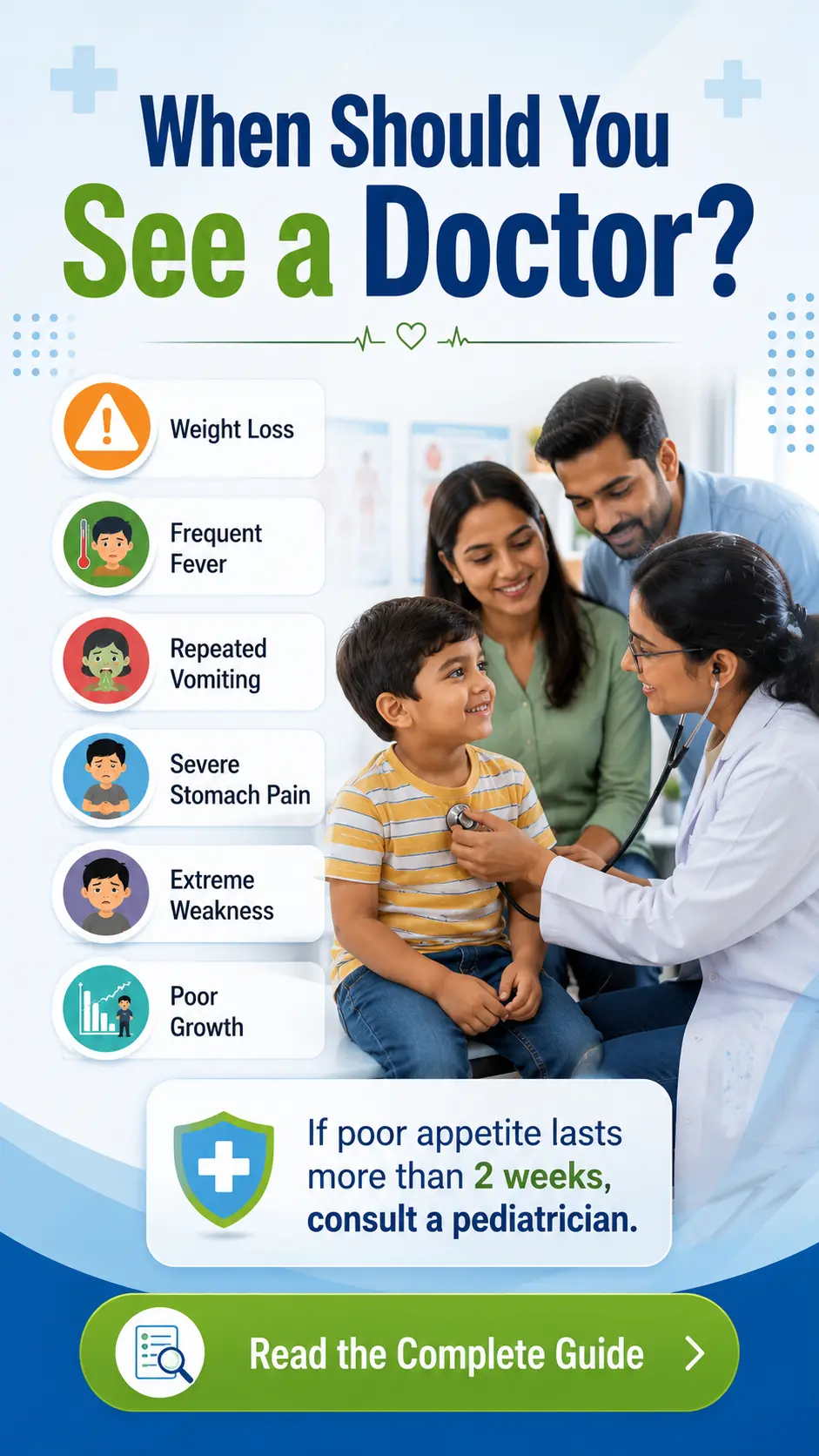
When Should You See a Doctor If Your Child Is Not Eating Well?
While temporary appetite loss is common, parents should know when it may indicate a more serious health issue. If your Child Not Eating Well for more than a few days and shows additional symptoms, it is important to seek medical advice.
Early diagnosis can prevent nutritional deficiencies, dehydration, and growth-related problems.
Warning Signs That Require Medical Attention
Contact a pediatrician if your child experiences any of the following:
- Persistent refusal to eat for more than one to two weeks
- Noticeable weight loss
- Frequent vomiting
- Severe or recurring stomach pain
- Difficulty swallowing food or liquids
- Persistent diarrhea or constipation
- High fever along with poor appetite
- Blood in the stool or vomit
- Extreme tiredness or weakness
- Signs of dehydration such as dry lips, sunken eyes, or reduced urination
- Poor growth or delayed development
- Swollen abdomen or persistent bloating
These symptoms may be related to infections, digestive disorders, nutritional deficiencies, allergies, or other medical conditions that require professional evaluation.
How Pediatricians Treat Poor Appetite
Treatment depends on the underlying cause rather than simply increasing appetite.
Your pediatrician may recommend:
Dietary Counseling
A nutrition plan tailored to your child’s age, weight, and nutritional needs.
Deworming Medication
If intestinal worms are detected or suspected, appropriate deworming medicine may be prescribed.
Treatment for Infections
If poor appetite is caused by bacterial or viral infections, treatment will focus on managing the illness.
Managing Digestive Disorders
Conditions such as constipation, acid reflux, or food intolerance may require dietary changes or medication.
Vitamin or Mineral Supplements
If blood tests reveal deficiencies in iron, zinc, vitamin D, or vitamin B12, supplements may be recommended.
Monitoring Growth
Doctors may monitor your child’s height, weight, and growth over time to ensure they are developing normally.
Tips to Prevent Appetite Problems
Prevention is always better than treatment. Establishing healthy routines early can reduce the chances of appetite-related issues.
Maintain Regular Meal Times
Serve meals and snacks at consistent times every day.
Encourage Balanced Nutrition
Include foods from all major food groups:
- Fruits
- Vegetables
- Whole grains
- Lean proteins
- Dairy products
- Healthy fats
Promote Active Play
Aim for at least 60 minutes of physical activity daily to support healthy growth and stimulate appetite.
Ensure Adequate Sleep
Children who get enough sleep often have better appetite regulation and overall health.
Limit Sugary Foods
Too many sweets, sugary drinks, and processed snacks can reduce interest in nutritious meals.
Practice Good Hygiene
Teach children to wash their hands before eating and after using the toilet to reduce the risk of infections and worm infestations.
Schedule Regular Health Checkups
Routine pediatric visits help monitor growth and identify nutritional concerns early.
Frequently Asked Questions (FAQ)
Why is my child not eating well but still active?
Some children naturally have smaller appetites. If your child is active, growing well, and maintaining a healthy weight, occasional poor appetite may not be a cause for concern. Continue offering balanced meals and avoid pressuring your child to eat.
Is poor appetite normal during growth?
Yes. Appetite often changes during different stages of growth. Toddlers and preschool-aged children may eat less than infants because their growth rate slows after the first year of life.
Should I force my child to eat?
No. Forcing children to eat can create negative feelings about food and mealtimes. Instead, offer healthy foods, maintain regular meal schedules, and allow your child to decide how much to eat.
Can worms cause loss of appetite?
Yes. Intestinal worm infestations can reduce appetite and may also cause stomach pain, weight loss, itching around the anus, and poor growth. Consult your healthcare provider regarding appropriate deworming.
Which foods naturally improve appetite?
Nutrient-rich foods such as eggs, yogurt, fresh fruits, vegetables, whole grains, lentils, lean meat, fish, nuts (if age-appropriate), and dairy products support healthy growth and may encourage better eating habits.
When should I worry about poor appetite?
Seek medical advice if poor appetite lasts more than one to two weeks or is accompanied by weight loss, fever, vomiting, severe abdominal pain, persistent diarrhea, dehydration, or poor growth.
Can stress affect my child’s appetite?
Yes. Emotional stress, anxiety, school-related concerns, family changes, or bullying can influence a child’s eating habits. Providing emotional support and maintaining open communication can help.
Is it okay to give appetite syrups?
Do not give appetite stimulants or syrups without consulting a pediatrician. Many cases of poor appetite improve with healthy routines, balanced nutrition, and treatment of any underlying medical condition.
Final Thoughts
Seeing your Child Not Eating Well can be worrying, but in many cases, the cause is temporary and manageable. Factors such as irregular eating schedules, minor illnesses, emotional stress, digestive discomfort, or nutritional deficiencies can all contribute to a reduced appetite.
The best approach is to focus on healthy eating habits rather than forcing your child to eat. Serve balanced meals at regular times, encourage daily physical activity, limit processed snacks, avoid screens during meals, and create a calm, positive mealtime environment.
Pay attention to your child’s overall health rather than judging a single meal. If your child continues to eat poorly, loses weight, or develops additional symptoms, consult a pediatrician for proper evaluation and treatment.
A healthy appetite develops over time through consistency, patience, and good nutrition. By understanding the possible causes and responding early, you can help your child grow stronger, healthier, and happier.
Key Takeaways
- Occasional appetite loss is common in children.
- Irregular eating habits, worm infestation, digestive problems, infections, and nutritional deficiencies are common causes.
- Offer small, balanced meals at regular times.
- Avoid forcing your child to eat.
- Encourage active play and screen-free family meals.
- Watch for warning signs such as weight loss, vomiting, dehydration, or persistent poor appetite.
- Seek medical advice if symptoms continue or worsen.
Healthy eating habits established during childhood can support lifelong growth, development, and overall well-being. Small daily changes can make a lasting difference in your child’s health.
Disclaimer: This article is for educational purposes only and should not replace professional medical advice. Always consult a qualified pediatrician for diagnosis and treatment if your child has persistent appetite loss or concerning symptoms.
